Your own growth factors. Your follicles. Reactivated.
PRP Hair Treatment uses blood-derived plasma rich in platelets and growth factors — combined with ACell® and microneedling — to reactivate dormant hair follicles, reverse male pattern baldness, and stimulate natural hair growth. Non-invasive, no surgery, fast recovery.
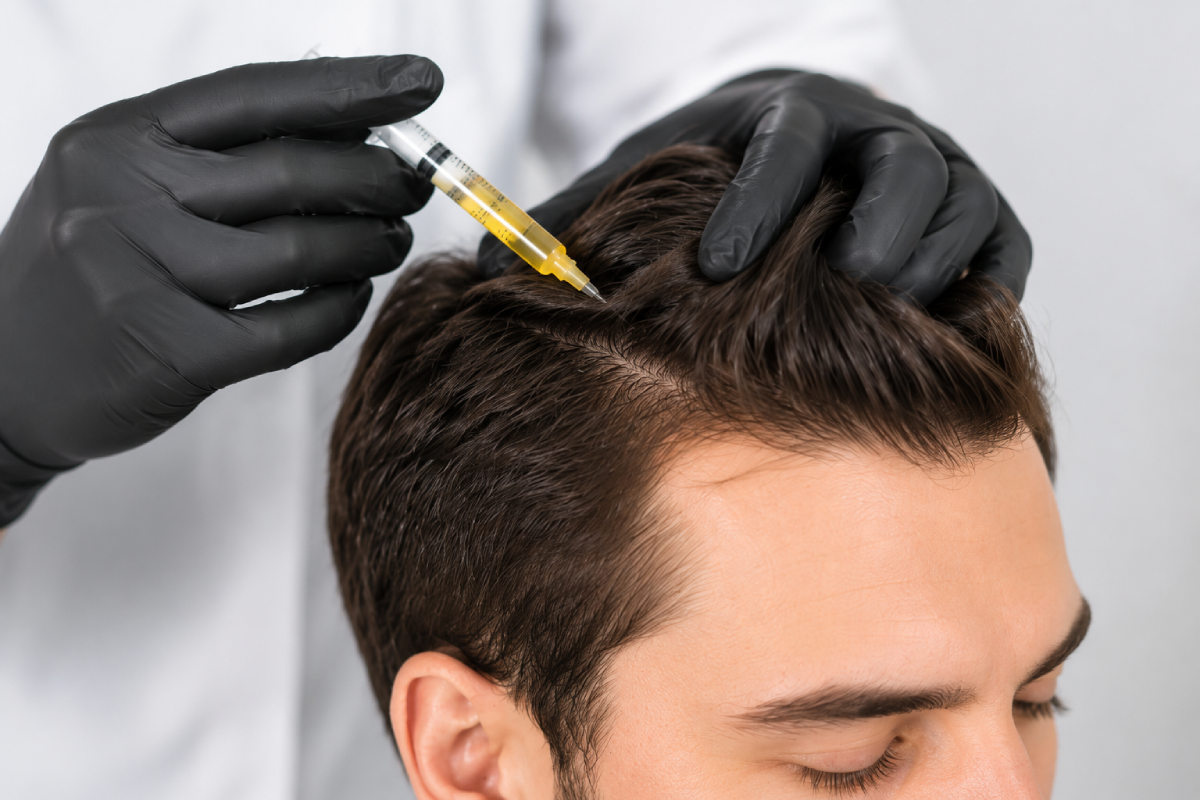
Hair loss has dozens of causes. PRP addresses the biology all of them share — follicle activity.
Whether caused by inherited factors, unhealthy diet, vitamin deficiency, stress, illness, or aging, hair loss ultimately comes down to follicle dormancy. PRP delivers concentrated growth factors directly to the scalp to reactivate follicles that have slowed or stopped.
Male pattern baldness is the most common form of hair loss — driven by DHT (dihydrotestosterone) sensitivity that causes follicles to miniaturize and eventually become dormant. PRP delivers growth factors that counteract this miniaturization process, stimulating follicle activity and reversing the pattern of decline. Most effective when started early, before follicles are permanently inactive.
While less discussed, thinning hair is common in women — particularly around hormonal transitions (perimenopause, postpartum, thyroid dysfunction). Women typically experience diffuse thinning rather than the receding pattern seen in men. PRP delivers growth factors across the affected scalp area, reactivating follicles that hormonal changes have suppressed.
Telogen effluvium — hair loss triggered by physical or emotional stress, illness, surgery, or rapid weight loss — causes large numbers of follicles to enter a dormant phase simultaneously. PRP growth factors provide the biological stimulus to bring these follicles back into the active growth phase. Most effective when the triggering event has passed.
Vitamin D, B12, iron, and zinc deficiencies are among the most common nutritional causes of hair loss — they impair follicle metabolism and reduce the energy available for hair production. At Iuventus, we commonly combine PRP hair treatment with nutritional IV therapy and Vitamin D injections to address both the structural (follicle stimulation) and nutritional components simultaneously.
Alopecia areata — the autoimmune condition that causes patchy hair loss — responds to PRP because the growth factors stimulate follicle activity in areas where the immune attack has caused dormancy. PRP is not curative for the autoimmune mechanism, but it provides meaningful follicle support that can improve density and reduce the visibility of patchy loss.
PRP is used as a complementary treatment to surgical hair restoration — applied to transplanted follicles to improve survival rates and accelerate the establishment of new growth. For patients who have had or are considering hair transplant surgery, PRP both improves surgical outcomes and provides a non-surgical option to exhaust before committing to surgery.
If your hair follicles are still alive, PRP can reactivate them. A physician assessment will tell you which category you're in.
The efficacy of PRP varies depending on the current condition of your follicles. If follicles are still viable, PRP will be the ideal solution to treat baldness and stop shedding. If follicles are permanently inactive, PRP may not meet expectations — and we'll tell you that honestly at your consultation.
Growth factors that wake dormant follicles.
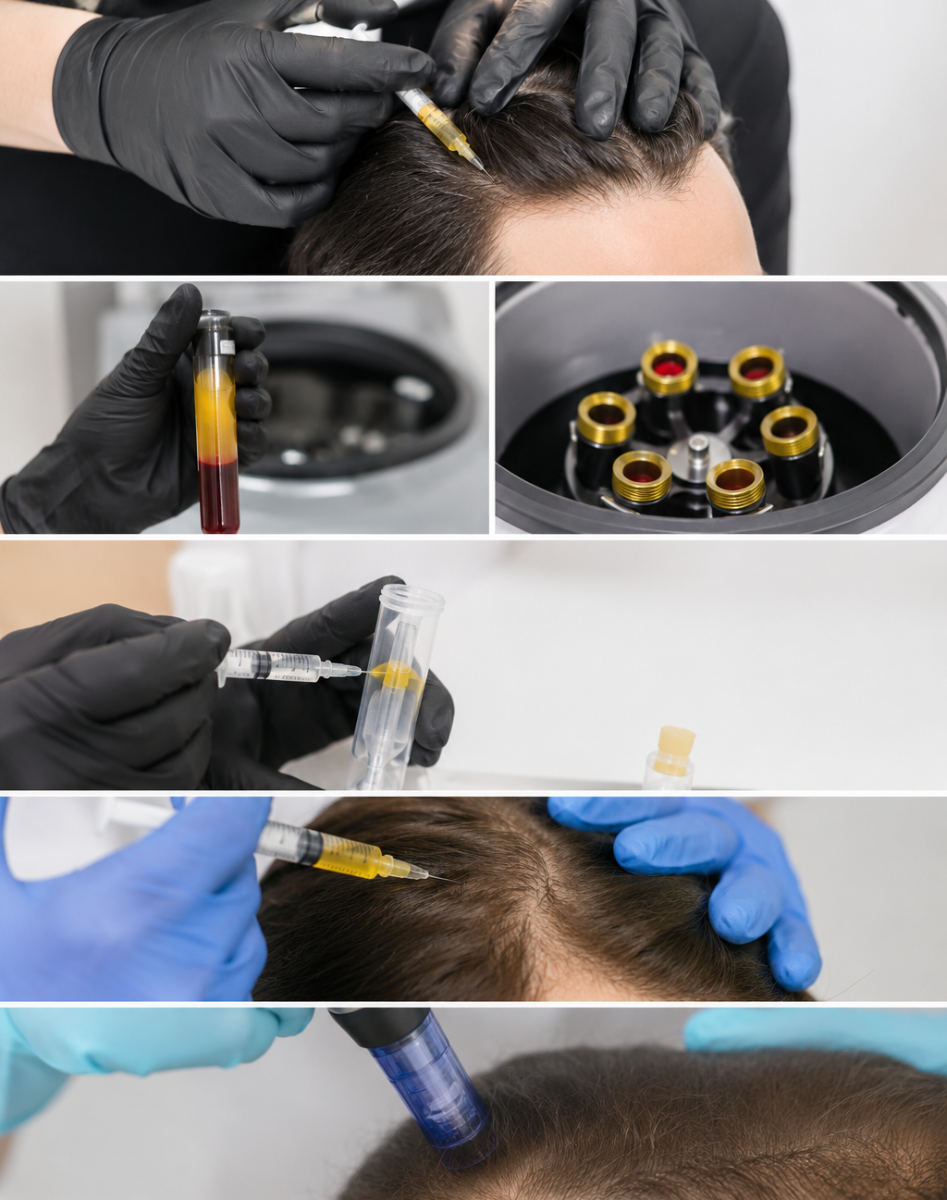
Human blood contains multiple growth factors that are essential for stimulating hair follicle activity. PRP Hair Treatment concentrates these factors and delivers them directly to the scalp. At Iuventus, the procedure begins with a blood draw from the arm. The blood is placed in a centrifuge that separates and concentrates the platelets — ensuring growth factor concentration is high enough to produce a therapeutic effect. ACell® — a tissue regeneration matrix — is then added to the plasma, forming the final PRP injection mixture.
The prepared PRP is administered to problem areas of the scalp to activate dormant follicles. Microneedling is also used to boost the efficacy of the treatment — creating microchannels that improve the penetration and distribution of growth factors across the treated area. The combination of concentrated PRP, ACell®, and microneedling produces a more comprehensive follicle activation than PRP injection alone.
Recovery is fast — short-term burning sensations immediately after the procedure are the most common side effect and disappear quickly. Anti-inflammatory drugs should be avoided during and after treatment as they can neutralize the effects of PRP therapy. The number of sessions required varies by patient and follicle condition — your physician will assess and recommend accordingly.
PRP reactivates dormant follicles — it cannot regenerate permanently inactive ones. The earlier treatment begins, the better the outcome. If your hair loss is advanced and follicles have been inactive for many years, PRP may not produce the results you're hoping for. A physician assessment determines your follicle viability before we recommend a protocol — we won't promise results we can't deliver.
Natural growth factors that biology already knows how to use.
PRP delivers the same growth factors your scalp would produce in response to tissue stimulation — just at therapeutic concentrations that normal biology can't achieve on its own. Combined with ACell® and microneedling, it is the most evidence-backed non-surgical hair restoration approach available.
From thinning hair to reactivated follicles.
We assess your hair loss pattern, its duration, probable cause, and follicle viability. We give you an honest assessment of what PRP can achieve for your specific case — and recommend whether to proceed or whether a different approach is more appropriate.
Blood drawn from the arm and centrifuged to concentrate platelets and growth factors. ACell® is added to the plasma. Local or topical anesthetic applied to the scalp before injection for comfort.
PRP mixture injected into problem areas of the scalp to activate dormant follicles. Microneedling performed across the treatment area to boost growth factor penetration. Session typically 45–60 minutes. Short-term burning sensation resolves quickly.
New hair growth develops over 3–6 months as reactivated follicles enter the growth phase. Multiple sessions recommended for optimal results — spaced 4–6 weeks apart. Maintenance sessions sustain the results as the treatment's effects evolve.
Medicine that
gets you.
PRP hair results depend entirely on follicle viability and protocol quality. We assess before we treat and set honest expectations from the first consultation.
ACell® Added to Every Protocol
We add ACell® — a tissue regeneration matrix — to our PRP preparation. This enhances follicle activation beyond what standard PRP injection alone produces. Not every clinic includes this step.
Microneedling Included
Microneedling is used alongside PRP injection to create microchannels that improve growth factor distribution and penetration across the scalp. The combination consistently outperforms injection alone.
Honest Follicle Assessment
We won't recommend PRP if your follicles are permanently inactive — it wouldn't produce the results you're seeking. A physician assessment of your follicle viability determines whether PRP is the right intervention before we commit you to a protocol.
No Anti-Inflammatory Interference
We instruct all patients to avoid NSAIDs and anti-inflammatory medications before and during treatment — these neutralize the inflammatory healing response that PRP relies on. This detail matters and is often missed in protocols that don't emphasize post-care properly.
Follicles reactivated.
Hair restored.
Everything you
want to know.
Hair loss is not
something you have to put up with.
A free consultation and an honest follicle assessment. We tell you what PRP can realistically achieve for your specific pattern — before you commit to a protocol.